The Future of Marketing Is Evidence, Not Advertising
By Tom Reidy
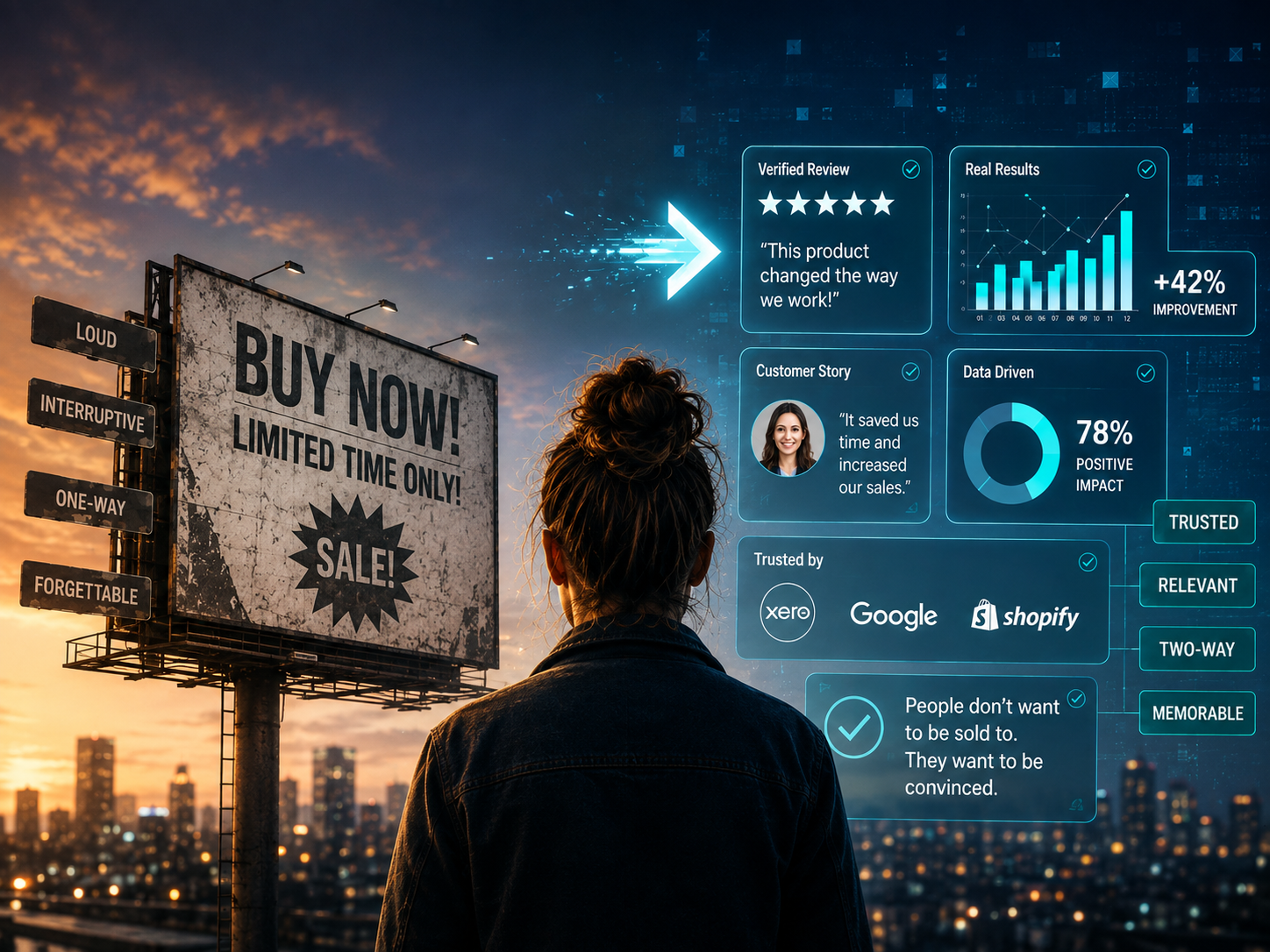
Key takeaways
- Evidence trumps advertising claims.
- AI fuels evidence-based decisions.
- Customer reviews build trust.
- Data-driven marketing is crucial.
- Strong brands gather evidence.
For more than a century, marketing has largely been built around persuasion.
Brands created advertisements designed to capture attention, shape perception, and influence purchasing decisions. The goal was often simple: tell a compelling story, communicate a unique selling proposition, and convince people that your product or service was the right choice.
The model worked because information was scarce. Businesses controlled much of the information available about their products. Customers had limited ways to verify claims, compare alternatives, or access the experiences of other buyers. Advertising filled that gap by helping consumers make decisions with the information available to them.
The internet changed that dynamic.
Suddenly customers could access reviews, compare prices, watch demonstrations, read case studies, join online communities, and discuss their experiences publicly. Brands no longer controlled the entire narrative. Every customer interaction had the potential to become part of the public conversation.
Artificial intelligence is accelerating this shift even further.
As AI assistants become increasingly integrated into how people research products, services, and solutions, the role of marketing is beginning to change. AI systems do not simply consume advertising messages. They analyse information from multiple sources, compare perspectives, identify patterns, and synthesise recommendations.
In this environment, claims alone become less valuable.
Evidence becomes everything.
Imagine asking an AI assistant to recommend a project management platform for a growing business. The assistant may consider information from the company's website, customer reviews, product documentation, social media conversations, analyst reports, case studies, and independent comparisons. The recommendation is unlikely to be based on a single advertising message. Instead, it emerges from the collective evidence available across the internet.
This represents a significant shift in how trust is created.
Historically, a business could make a claim such as "We provide the best customer service in the industry." While customers might have looked for supporting information, the claim itself was often the centrepiece of the marketing message.
In the future, the claim matters far less than the evidence supporting it.
What do customers say?
How quickly are issues resolved?
Are there public examples demonstrating the quality of service?
Do employees speak positively about the company?
Are there independent reviews that support the claim?
Can AI find consistent signals across multiple sources?
The strongest brands will not be those that make the boldest claims. They will be the brands with the strongest body of evidence.
This is already happening.
When someone evaluates a restaurant, they often trust hundreds of customer reviews more than a beautifully written advertisement. When researching software, buyers frequently spend more time reading user feedback and case studies than product brochures. When considering a new running shoe, many runners seek out real-world experiences from other runners before trusting the manufacturer's marketing material.
The role of marketing is gradually shifting from creating messages to creating proof.
Customer stories become proof.
Case studies become proof.
Expert opinions become proof.
Public conversations become proof.
Educational content becomes proof.
Transparent documentation becomes proof.
Even how a company responds to criticism becomes proof.
Every interaction contributes to a growing body of evidence that shapes how customers, search engines, and increasingly AI systems perceive the brand.
This does not mean advertising disappears.
Advertising will continue to play an important role in creating awareness, introducing ideas, and capturing attention. However, its function may change. Instead of acting as the primary mechanism for building trust, advertising may increasingly become the invitation that leads people toward evidence.
The advertisement starts the conversation.
The evidence closes it.
This distinction is important because AI is fundamentally changing how decisions are made. Search engines historically directed users toward information sources. AI assistants increasingly interpret those sources and provide recommendations based on the collective evidence they find.
As a result, businesses may need to think less about how they present themselves and more about how they are experienced.
The question is no longer, "What do we want people to believe about us?"
The more important question becomes, "What evidence exists that supports what we want people to believe?"
That shift affects everything from customer service and product development to content creation and community management. Every department becomes part of marketing because every department contributes evidence.
A customer support interaction can influence future recommendations.
A product update can influence future recommendations.
A review can influence future recommendations.
A LinkedIn post from an employee can influence future recommendations.
The walls between marketing and operations begin to disappear because both contribute to the same body of evidence.
The brands that thrive in the next decade will understand this distinction. They will invest less energy in creating isolated campaigns and more energy in creating remarkable experiences worth talking about. They will recognise that trust is no longer built solely through communication. It is built through accumulated proof.
Marketing is not disappearing.
Advertising is not disappearing.
But the foundation beneath them is changing.
The future belongs to organisations that understand that every action creates evidence, every experience contributes to trust, and every interaction becomes part of the story that AI, customers, and communities tell about their brand.
In a world where AI increasingly acts as the interpreter, evidence becomes the language it understands best.